
March–May: green-up
The median last spring freeze is March 2. Lawns wake up through March and April, and mowing picks up quickly. This is when many homeowners start a weekly or every-other-week schedule.
Get free quotes from independent local lawn services for weekly or every-other-week mowing, edging, trimming and seasonal lawn care across Savannah, Pooler and Richmond Hill.
Get a Free Quote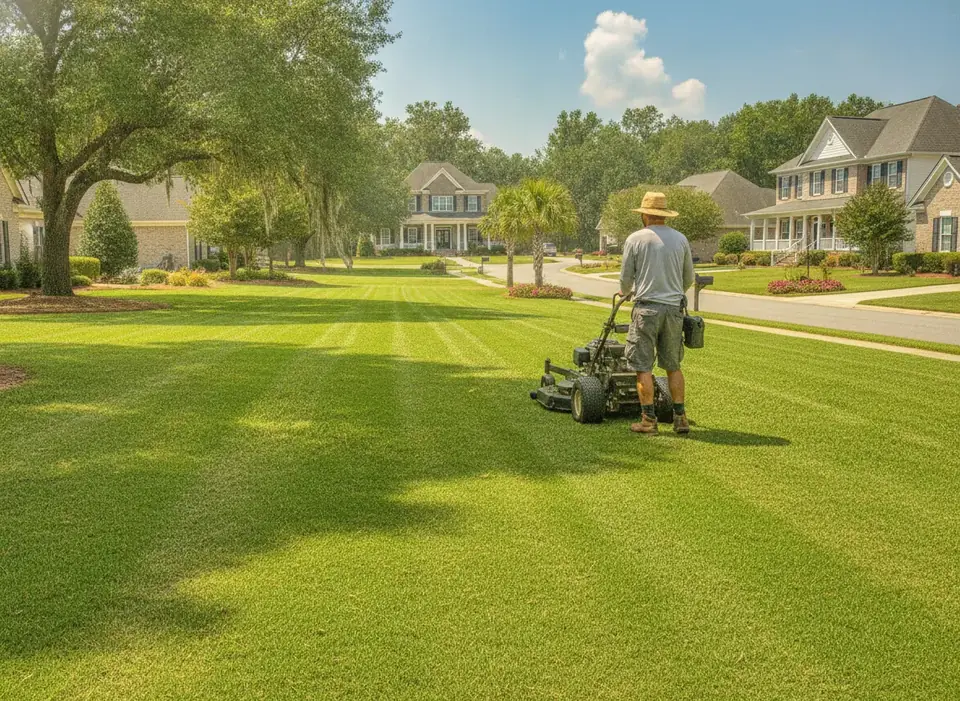
Savannah lawns grow hard for most of the year. The median freeze-free season at the airport is about 270 days, July highs average 92.3 °F, and June through September brings 46% of the year's rain. That combination means fast summer growth, frequent mowing and a real risk of scalping or disease if the mower is set wrong for the grass.
We connect Savannah-area homeowners with independent local lawn care, landscaping and tree companies for free, no-obligation quotes. The company you choose quotes, contracts and does the work directly with you. Whether you need lawn care in Savannah, GA every week or a lawn service in Pooler or Richmond Hill every other week, the request takes a few minutes.
The single biggest mowing mistake on the coast is cutting too low. These heights come from UGA Extension's Glynn County lawn guidance, a coastal county with the same grasses as Savannah.
| Grass | Mowing height | Notes |
|---|---|---|
| Centipede | 1–2 in. | UGA Circular 1003 gives 1.0–1.5 in.; very common on the coast |
| St. Augustine | 2–3 in. | Mowing near 3 in. also helps against chinch bugs |
| Zoysia | 1–2 in. | Dense; a sharp blade matters |
| Common bermuda | 1–2 in. | Needs full sun |
| Hybrid bermuda | 1–1.5 in. | Often reel-mowed lower on sports turf |
Two UGA rules apply to every grass: raise the cut about ½ inch during hot weather, and never remove more than one-third of the leaf blade at once. Not sure which grass you have? The Savannah grass guide shows how to tell them apart.
Every lawn service sets its own package, so compare line by line. Common items are:
Some companies also offer fertilization and weed control. In Georgia, any company that applies weed killer or weed-and-feed to your lawn for a fee needs a Pesticide Contractor License; the weed control and fertilization page explains what to check.
The median last spring freeze is March 2. Lawns wake up through March and April, and mowing picks up quickly. This is when many homeowners start a weekly or every-other-week schedule.
The wettest, hottest months. Expect weekly mowing, raise the deck about half an inch and keep blades sharp to limit stress and fungus.
Growth tapers. Leaves and acorns start dropping, and storm debris can show up after tropical systems. Large patch can appear as brown rings as soils cool.
After the median first freeze on November 30, warm-season lawns brown out. Visits drop to occasional cleanups, leaf removal and bed care.
A well-watered lawn handles mowing better than a stressed one. UGA recommends about 1 inch of water a week from rain plus irrigation, wetting the soil 5–7 inches deep, early in the morning. That fits the City of Savannah's schedule: no outdoor irrigation from 10 a.m. to 4 p.m., no watering on Fridays, even addresses Monday, Wednesday and Saturday, odd addresses Tuesday, Thursday and Sunday. Pooler and Richmond Hill residents should check with their water provider. The Savannah watering schedule post covers the details and exemptions.
Mowing and weekly lawn maintenance runs about $48–$143 per visit (average about $96), based on typical ranges from published cost guides (2026) — estimates, not quotes.
Price drivers include the size of the lot, how many beds and trees need trimming around, fenced or gated backyards, slopes and ditches, the grass height at the first visit, and how often the company comes. Weekly service often costs less per visit than occasional cuts of an overgrown lawn. The price guide and calculator can estimate a month of visits.
Requests come from across the area, including:
Need more than mowing? See yard cleanup or landscaping in Savannah.
Published cost guides (2026) list mowing and weekly lawn maintenance at about $48–$143 per visit, with an average near $96. These are estimates, not quotes. Lot size, obstacles, gates, slopes, how overgrown the grass is and whether edging, trimming and blowing are included all change the price, so ask for quotes on the same scope.
It depends on the grass. UGA Extension's coastal guidance: common bermuda 1–2 inches, hybrid bermuda 1–1.5, centipede 1–2 (UGA Circular 1003 says 1.0–1.5), St. Augustine 2–3 and zoysia 1–2. Raise the deck about half an inch in hot weather, and never remove more than one-third of the blade at one cut.
Frequency follows growth, not the calendar. The one-third rule means a centipede lawn kept at 1.5 inches should be cut before it passes about 2¼ inches. In the hot, wet months from June through August that often means weekly visits; growth slows in fall, and warm-season lawns go dormant after the late-November freezes.
Usually not. Returning short clippings to the lawn recycles nutrients, which helps on Savannah's sandy, low-fertility soils. Bagging makes sense when the grass got too tall, when clippings clump on wet days or during a disease outbreak such as large patch. Ask the company you choose how it handles clippings and whether hauling them away costs extra.
Free, no-pressure quotes across Savannah, Pooler, Richmond Hill, Wilmington Island, Skidaway Island, Rincon and Tybee.